

Quick answer
Yes — you can watch for whales from shore in Vancouver, most reliably from the free headlands of Lighthouse Park, open daily 07:00–22:00. Bigg's killer whales, humpbacks, and porpoises pass through the Strait of Georgia year-round, though sightings are never guaranteed. Arrive early: the calm 07:00–10:00 window offers the easiest viewing conditions.
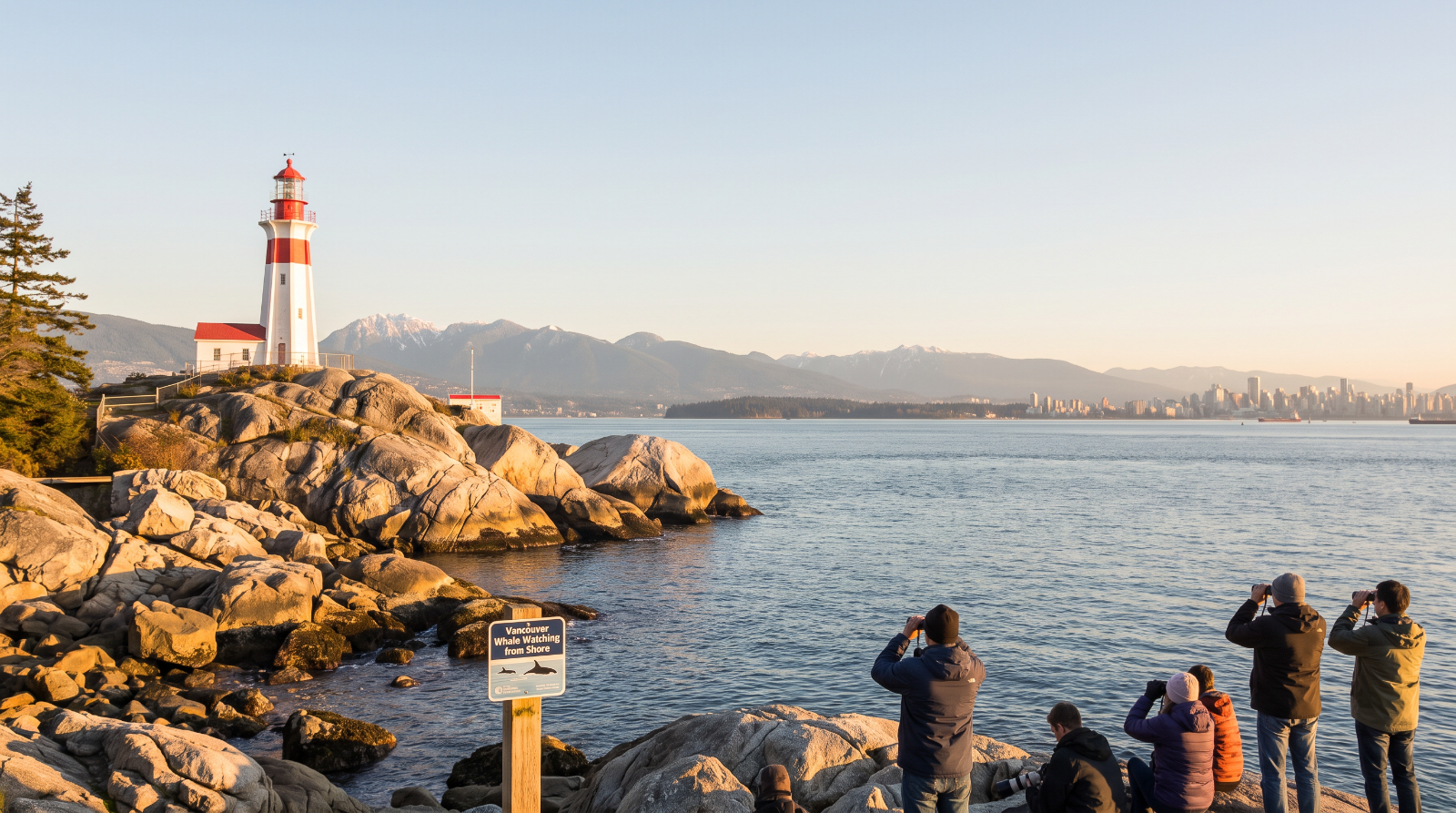
The whales moving through the Strait of Georgia do not always stay offshore. Bigg's killer whales, humpbacks, and harbour porpoises trail salmon and herring runs along the coast, and those routes can carry them within sight of West Vancouver's rocky points. This is what makes vancouver whale watching from shore a real possibility rather than a long shot. A patient observer with binoculars and a fixed vantage can learn to read the water for blows, dorsal fins, and the sudden scattering of seabirds. What draws these animals close is food and geography. The strait funnels tidal currents around Point Atkinson, concentrating the herring, anchovy, and juvenile salmon that whales and porpoises pursue. Growing seal and sea lion numbers along the coast have, in turn, drawn more Bigg's killer whales into these inshore waters over recent years. That ecological shift is part of why land watchers now report encounters that once seemed unlikely, and why the rocky Vancouver shoreline has earned attention among people who prefer to keep their feet on solid ground. Lighthouse Park sits at Point Atkinson, where the land pushes into the strait and the water deepens fast. The headland behaves less like a ticketed attraction and more like a public lookout onto the Salish Sea. Granite bluffs, arbutus and Douglas fir, and the 1912 light frame a working stretch of coast where tides, currents, and forage fish decide what surfaces. Results are measured in patience, not guarantees. Some mornings return nothing; others hand over a distant fin cutting the chop, or the slow arc of a humpback's back. Understanding land-based whale spotting begins with honest expectations. Sightings from the coast are unpredictable and frequently distant, which is why many travellers treat the headland as a first stop rather than the entire plan. Shore-based whale watching rewards those who arrive without a rigid schedule, settle into one spot, and scan the horizon methodically. Marine traffic, kelp lines, and the behaviour of gulls all offer quiet clues about where to look. For anyone weighing whether the coastline alone will satisfy them, vancouver whale watching from shore works best as one piece of a wider itinerary that the sections below break down in detail.
“Results are measured in patience, not guarantees.”
Best Seasons and Hours for Vancouver Whale Watching from Shore
The peak window for spotting whales from the Strait of Georgia shore spans from May to October, with mornings between 07:00 and 10:00 offering the highest likelihood of sightings. Rising tides during these hours often push transient killer whales and humpbacks closer to the rocky coastline.
May to June
Low to moderate visitor traffic10°C to 18°C, occasional rain
Transient killer whales follow migrating salmon close to the shore. Morning high tides during these months improve visibility as waters remain relatively calm.
July to August
Peak summer crowds15°C to 23°C, mostly sunny
Humpback whales and resident pods frequent the deep channels of the Strait of Georgia. Arriving before 10:00 helps avoid mid-day heat haze and recreational boat glare.
September to October
Low weekday crowds8°C to 15°C, cool and crisp
Late-season humpback activity remains high before winter migration. Active ocean swells increase, but morning hours still present the flattest sea conditions for spotting spouts.
Winter (November to April)
Very low crowds2°C to 8°C, frequent rain
While whales are less common, occasional harbor porpoises and sea lions feed near the rocky points under high-contrast overcast light.
Verdict: For the best combination of calm water and active marine life, visit on a weekday morning between 07:00 and 10:00 during a rising tide from June to September.
Cost and Admission for Vancouver Whale Watching from Shore
Visiting Lighthouse Park to spot whales from the shore is completely free of charge. There are no ticket tiers, entry fees, or reservation requirements to access the trails and viewing areas.
A typical adult pays 0 CAD to enter the park, with the only potential cost being hourly vehicle parking fees if arriving by car.
Getting to Lighthouse Park for Vancouver Whale Watching from Shore
Lighthouse Park sits at 4902 Beacon Ln in West Vancouver, jutting into the Strait of Georgia. While driving via the Lions Gate Bridge is the fastest option, taking the 250 bus from downtown Vancouver offers a direct public transit route.
250 bus (Horseshoe Bay) from Westbound W Georgia St to Westbound Marine Dr @ Beacon Lane
Lions Gate Bridge and Marine Drive to 4902 Beacon Ln
Downtown Vancouver to 4902 Beacon Ln
Beacon Lane south from Marine Drive to the trailhead
Top Spots for Watching Whales in Lighthouse Park
Lighthouse Park offers several rocky shore viewpoints with direct exposure to the deep waters of Howe Sound and the Strait of Georgia. These natural promontories provide elevated vantage points that make land-based whale spotting highly effective.
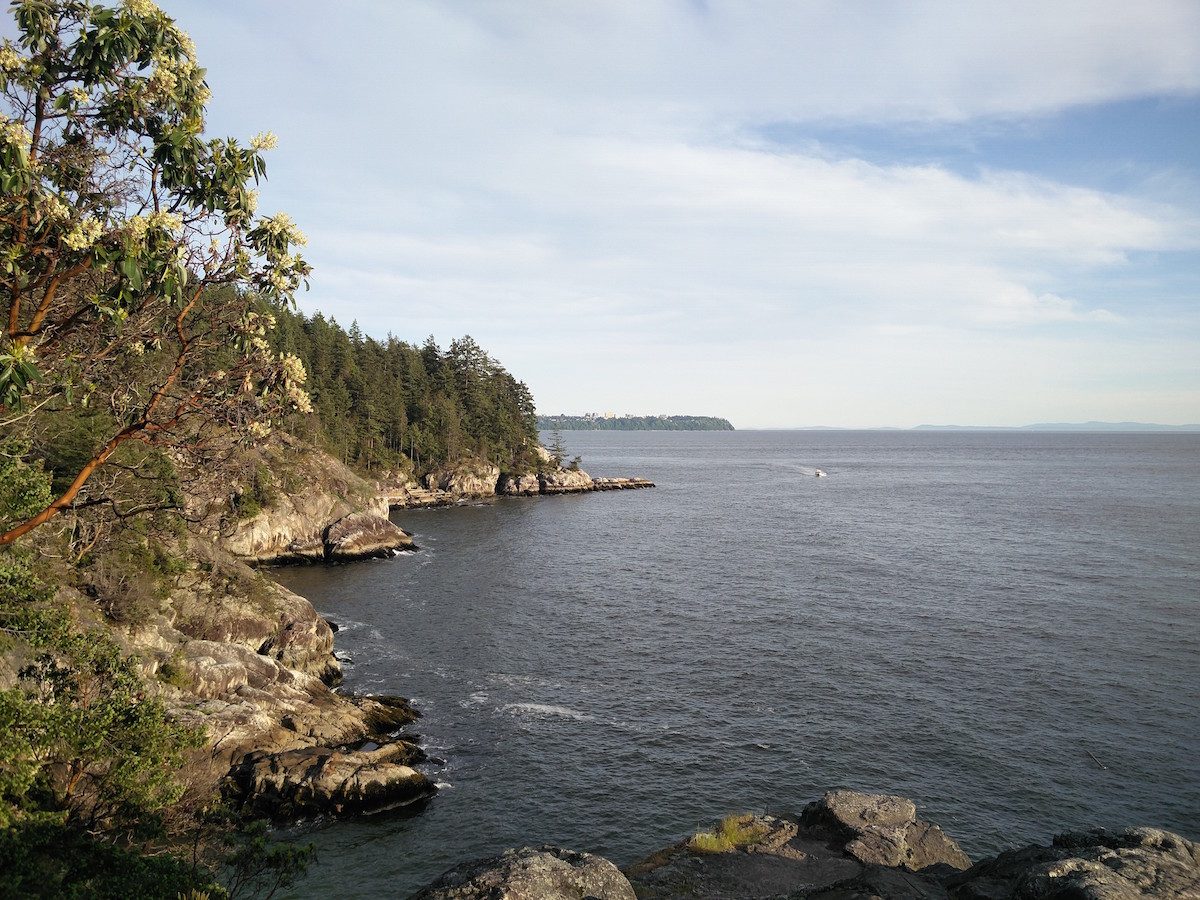
Juniper Point
Positioned at the northwest tip of the park, this granite outcrop looks directly over Howe Sound and Passage Island. The deep, drop-off waters here frequently attract transient orcas and humpback whales.
Scan the deep channel near Passage Island for sudden spouts.
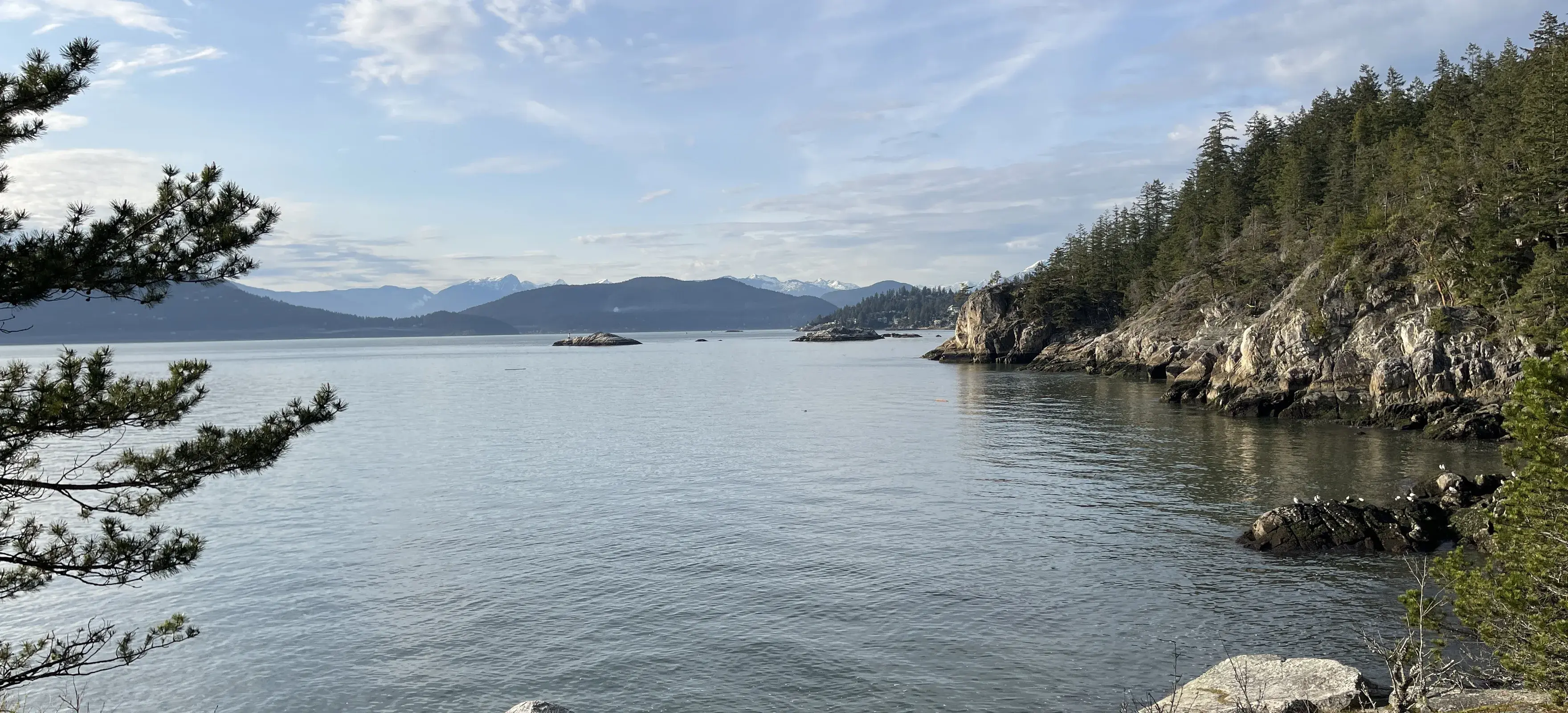
Shore Pine Point
Offering wide southern vistas, this spot overlooks the entrance of Howe Sound and the Strait of Georgia. The flat rock ledges provide a stable platform to set up spotting scopes.
Use binoculars to watch the shipping lane boundaries for dorsal fins.
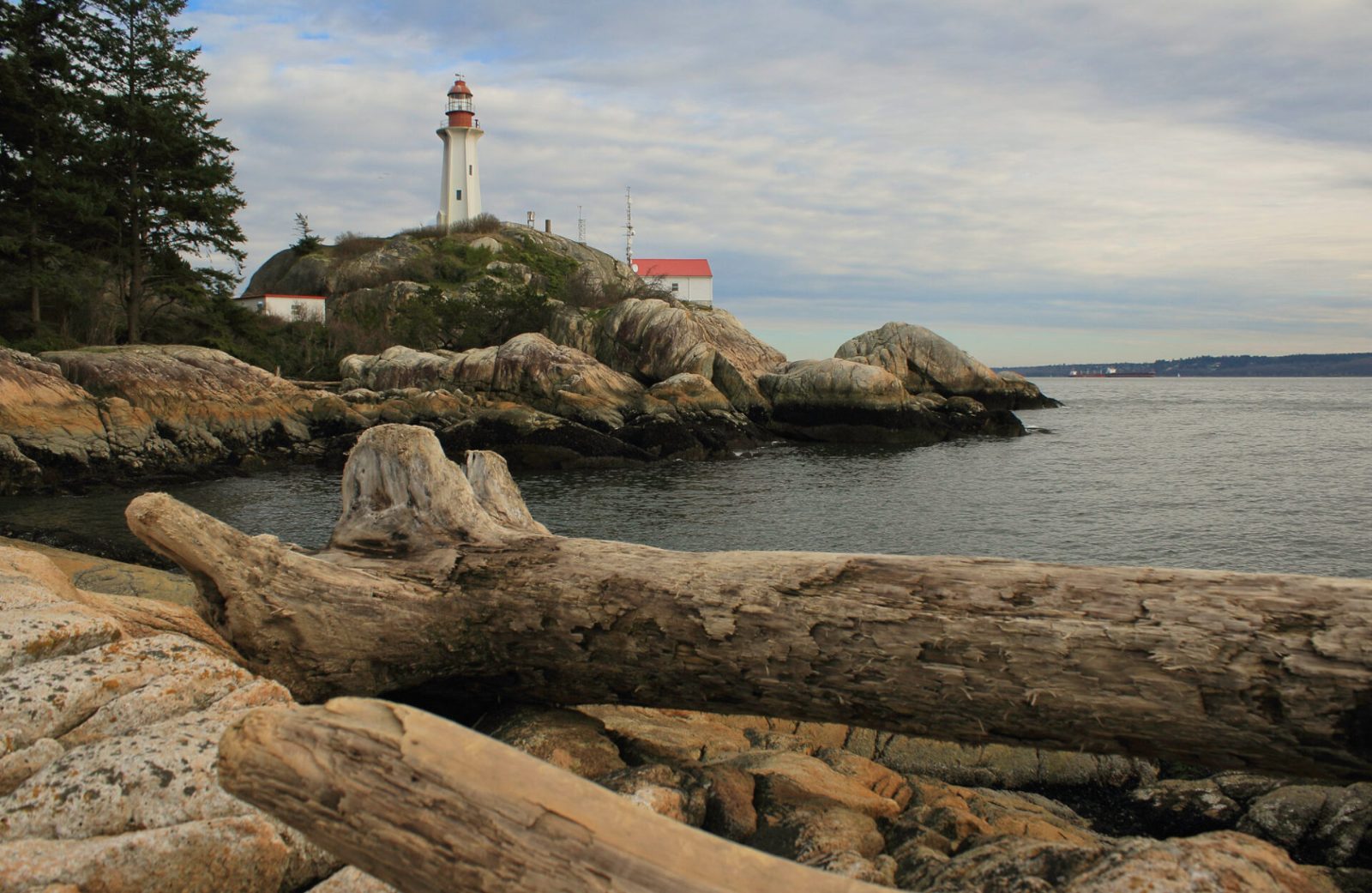
West Beach
Situated just west of the historic lighthouse, this rocky beach provides a low-angle perspective of the Strait of Georgia. The kelp beds close to the shore often attract harbor seals.
Watch the edges of the kelp forests for harbor seal activity.
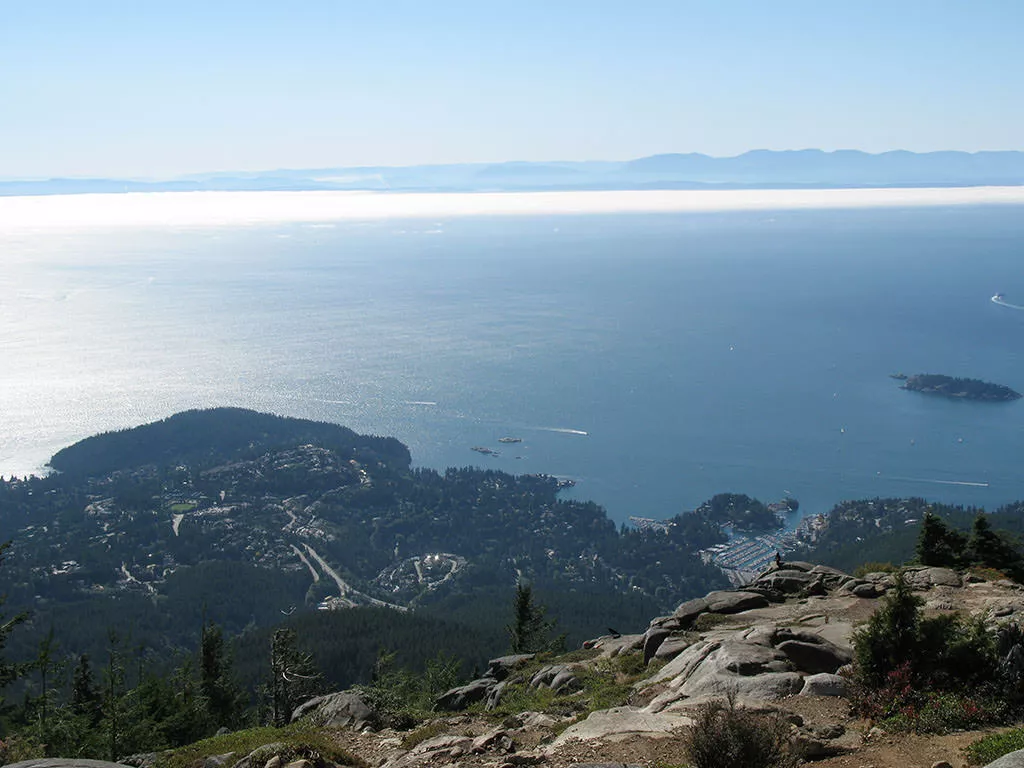
Eagle Point
Tucked away on the eastern side of the park, this quieter viewpoint peers over Burrard Inlet. It offers a clear angle to catch whales moving between the inner harbor and the main strait.
Watch the tide lines where current shifts concentrate schooling fish.
Vancouver Whale Watching from Shore vs. Boat Tours
Choosing between watching whales from the shoreline of the Strait of Georgia or booking a guided boat tour involves balancing cost against sighting probability.
| Shore Spotting (Lighthouse Park) Self-guided land observation |
Top pick Guided Boat Tours Commercial vessel excursions |
|
|---|---|---|
| Cost | 0 CAD entrance fee. | Typical adult tickets cost 179 CAD to 229 CAD plus taxes. |
| Sighting Guarantee | 0% sighting guarantee with sightings relying on seasonal migration patterns. | 95% sighting guarantee, typically offering a free return trip if no whales are spotted. |
| Seasickness Risk | 0% risk of seasickness as you remain on solid land. | Moderate to high risk depending on wind, waves, and vessel design in the Salish Sea. |
| Comfort & Amenities | Basic public restrooms at park trailheads; no food vendors or indoor shelters at viewpoints. | Heated indoor cabins, flush toilets, hot beverages, and guided commentary from naturalist guides. |
| Flexibility | No bookings needed; open from 07:00 to 22:00 daily for self-paced visits. | Strictly scheduled departures requiring advance reservations for 3 to 5-hour tours. |
Verdict: Choose shore spotting if you prefer a free, flexible hike with no seasickness risk, but book a boat tour if you want a guaranteed whale sighting.
Insider Tips for Successful Land-Based Whale Spotting
Maximizing whale sightings from the Strait of Georgia shoreline requires tracking real-time data and observing specific wildlife behaviors.
Monitor Commercial Tour Boats
Use a marine traffic app to check where local tour operators are idling. A cluster of boats usually indicates active whale presence.
Use the WhaleReport App
Download this tool by the BC Cetacean Sightings Network to view live, citizen-sourced reports. Contributing your own sightings also helps protect local marine life.
Watch for Diving Seabirds
Look for gulls swirling and diving in a concentrated area. This feeding activity, known as a baitball, often signals hunting humpbacks or orcas.
Track Sea Lion Movements
Watch for sea lions surfacing or barking, as they feed on the same fish runs as whales. Transient orcas are also drawn to these marine mammal groups.
Select the Right Optics
Pack 8x42 or 10x42 binoculars to scan the wide horizon of the Strait of Georgia. These provide the best balance of magnification and field of view.
Differentiate Blow Shapes
Look for misty spouts against the water. Humpbacks create a tall, bushy plume, while orcas have a lower, quick puff.
Common Mistakes to Avoid When Spotting Whales from the Coast
Watching whales from Lighthouse Park's granite shoreline rewards preparation. A few common oversights can cut your visit short or put you at risk on the rocks.
Wearing smooth-soled shoes on wet granite
The sloping cliffs stay slick with sea spray and morning dew. Wear grippy, closed-toe shoes with textured rubber soles for traction.
Skipping windproof layers on the exposed coast
Wind off the Strait of Georgia drops the temperature fast, even in summer. Pack a windproof jacket and a warm mid-layer.
Not checking tide charts before arriving
Higher tides shrink the rock platforms and change which viewpoints stay dry. Check the local tide forecast and plan your position around it.
Climbing past marked areas onto slick lower rocks
Wet, algae-covered rock near the waterline is a fall hazard with no railings. Stay on established viewpoints and keep back from the edge.
Arriving with no way to check conditions
Call the park at +16049257275 before setting out if you are unsure about access or weather.
Cutting the visit too short
Whales surface unpredictably, so budget an hour or more of patient watching rather than a quick stop.
Accessibility at West Vancouver Shoreline Viewpoints
Although the short, barrier-free Birdsong Path provides a flat, compacted gravel-surfaced forest loop starting at the entrance, reaching the main coastal viewpoints for spotting whales requires traversing steep, uneven terrain and navigating rough stone steps.
Only the flat Birdsong Path and the designated parking bays at the main entrance are level and paved.
The main service road is wide but steep, while paths down to rocky coastal vantage points involve rugged stone steps.
One wheelchair-accessible portable toilet is situated in the main parking lot near the trailhead.
Arriving between 07:00 and 10:00 avoids larger crowds and provides a calmer environment along the viewpoints.
No elevators or mechanical lifts are available within this natural coastal forest reserve.